
TMD Inspiration
Why Your Designer Belongs on the Jobsite
Categories
Recent
GET IN TOUCH
On social
By phone
202 465-8114
By Mail
1350 Beverly Road, Suite 115
PMB 143
McLean, VA 22101
By form
Interested in working with us?
Use the contact form to tell us more about your project. Someone will get back to you within 48 business hours.
Based in McLean, VA
Creating inspired interiors for discerning clients since 2003. Accepting clients in DC, Virginia, Maryland, and select cities throughout the United States.
Why Your Designer Belongs on the Jobsite
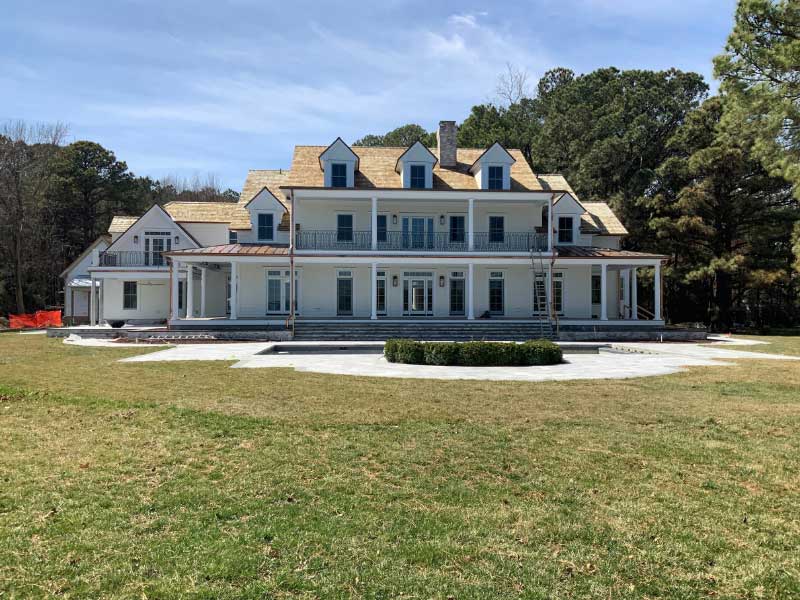 An interior designer’s role during construction is to protect the design as it becomes real. On site, we confirm measurements, placements, and finishes, answer questions from the builder and trades in real time, and refine details before they become permanent. That’s why, on every custom build and whole-home renovation, you’ll find us walking the jobsite often.
Many people assume an interior designer’s work begins once the walls are painted. At Tracy Morris Design, it begins much earlier, often before blueprints are finalized, and it continues through every stage of jobsite construction. Here’s a closer look at what that time on site involves and why it matters so much to how a finished home feels.
What Is the Role of an Interior Designer During Construction?
During construction, the interior designer serves as the keeper of the interior vision. The architect defines the structure and the builder manages the work; our role is to make sure every interior decision, from outlet heights to tile layouts to cabinetry details, is carried out exactly as designed. Regular designer site visits help small issues get resolved before they grow, keeping the whole project on track.
This is what it means to work with a designer throughout the construction process. It’s also why we believe so strongly in hiring a construction-minded interior designer. Being comfortable on a jobsite, reading drawings fluently, and speaking the language of the trades allows us to be a true partner to the builder rather than an occasional visitor.
Drawings Can’t Show Everything
Even the most detailed plans are a two-dimensional promise of a three-dimensional space. Walking through a framed room reveals things no drawing can: how afternoon light falls across a wall, how a ceiling height actually feels, and where the best view from a window lands when you’re seated rather than standing.
Those observations shape decisions. A window seat may shift a few inches to center on the view. A sconce may move to catch the light differently. Being present lets us respond to the house as it really is, which is how a home comes to feel tailored to the people who live there, not simply built.
What We Look for at Each Stage of Jobsite Construction
Every phase of jobsite construction brings its own decisions, and each one is an opportunity. Our site visits typically focus on:
- Framing: window and door openings, ceiling heights, and blocking for mirrors, art, and future features.
- Electrical and plumbing rough-in: outlet, switch, and fixture locations aligned with the furniture plan.
- Drywall and trim: casing profiles, reveals, and how millwork meets walls and ceilings.
- Tile and stone: layout, grout lines, and how veining flows across a slab.
- Cabinetry and built-ins: proportions, hardware placement, and interior organization.
- Final finishes: paint colors in the home’s actual light, lighting levels, and installation details.
Once a stage closes, changes become far more complicated. Being there at the right moment is what keeps the design intact.
Small Adjustments, Made at the Right Moment
On a jobsite, inches matter, and timing matters even more. An outlet that should be centered behind a nightstand, a pendant that needs to align with an island rather than the ceiling joists, a shower niche that should fall neatly between tile joints: each is a quick conversation while walls are open. After the fact, the same change can mean demolition, delays, and added cost.
Refinement doesn’t only happen when styling a finished shelf at the end of a project. It happens when we stand in a half-built room and ask whether every element has a purpose and sits exactly where it should.
Most of these adjustments are improvements rather than corrections. Seeing a space in person often reveals a better option than the one on paper, and the jobsite is where you can still embrace that opportunity.
Collaboration Is Built Face to Face
Great homes are built by great teams, and teams work best when they see each other regularly. Being on site lets us answer a builder’s question in minutes instead of days, review a sample alongside the craftsperson installing it, and solve challenges together as they arise. It keeps everyone aligned around one shared vision.
Tracy’s nearly 30 years of experience include a deep comfort with the construction side of a project, from groundbreaking through final furnishings. That familiarity means we can look at a framed wall or a plumbing rough-in and understand what it will mean for the finished room, then talk through options with the builder in practical terms rather than abstract ones.
It’s also a matter of respect. The builders, carpenters, tile setters, and electricians we collaborate with take enormous pride in their work. Showing up, listening, and valuing their expertise builds the kind of trust that shows in the finished home.
What Frequent Site Visits Mean for Our Clients
For our clients, our time on site translates into fewer surprises and far less stress. Building or renovating a home involves thousands of decisions, and few homeowners want to field questions from the trades every week. We handle those conversations, keep clients informed, and bring forward only the choices that truly need their input.
The result is confidence. Clients know the home taking shape matches the one we envisioned together, rooted in the one question we ask before every custom project begins. You can see how this process comes together in a finished home in our new home construction project in Bethesda.
When Should an Interior Designer Get Involved?
The earlier, the better. Ideally, an interior designer joins the project before blueprints are finalized, working alongside the architect and builder from the very first planning conversations. That early involvement allows interior details to be built into the plan rather than added later. We share more about timing in our article about when to bring in a designer.
FAQs
What does an interior designer do during jobsite construction?
An interior designer protects the interior vision while the home is being built. That includes reviewing work on site, confirming outlet, lighting, and fixture placements, checking tile and cabinetry layouts, answering questions from the builder and trades, and refining details while changes are still simple to make.
How often should an interior designer visit the jobsite?
It depends on the project’s scope and pace, but visits typically align with key milestones such as framing, electrical and plumbing rough-in, trim, tile, cabinetry, and final finishes. On a custom build or whole-home renovation, frequent visits help catch small issues early and keep the project moving smoothly.
Does an interior designer replace the builder or project manager?
No. The builder manages construction, scheduling, and the trades, while the interior designer focuses on making sure interior decisions are executed as designed. The two roles complement each other, and the best results come from a unified team that communicates openly and regularly throughout the project.
Do I need to be on site as often as my designer?
Not at all. One benefit of working with a construction-minded designer is that we handle day-to-day design questions on site, keep you informed, and bring forward only the decisions that need your input. You can enjoy the process without managing every detail yourself.
Ready to build a home with a partner who’s there every step of the way? Contact us today to begin your next project.