
TMD Inspiration
Interior Design in Georgetown: How Historic Architecture Shapes Modern Living
Categories
Recent

GET IN TOUCH
On social
By phone
202 465-8114
By Mail
1350 Beverly Road, Suite 115
PMB 143
McLean, VA 22101
By form
Interested in working with us?
Use the contact form to tell us more about your project. Someone will get back to you within 48 business hours.
Based in McLean, VA
Creating inspired interiors for discerning clients since 2003. Accepting clients in DC, Virginia, Maryland, and select cities throughout the United States.
Interior Design in Georgetown: How Historic Architecture Shapes Modern Living
 Historic streets in Georgetown offer a masterclass in timeless interior design and architecture, where Federal townhomes and Victorian row houses create one of Washington, D.C.’s most distinctive neighborhoods. For interior designers working in this prestigious area, the challenge—and the opportunity—lies in honoring Georgetown’s rich architectural heritage while creating interiors that support contemporary lifestyles.
Georgetown: Architectural Legacy
Georgetown’s architectural character reflects centuries of American design evolution, with homes spanning from colonial-era residences dating to the 1700s through Victorian properties of the late 1800s. The neighborhood’s Federal-style homes, built in the late 18th and early 19th centuries, are known for their symmetrical facades, refined proportions, decorative cornices, and elegant restraint, which defined post-Revolutionary American architecture.
The Victorian era later introduced more ornate detailing, bay windows, decorative millwork, and layered architectural ornamentation. While Georgetown is often associated primarily with Federal homes, many residences were actually constructed during the Victorian period, creating a rich architectural tapestry that designers must approach thoughtfully.
Understanding a home’s architectural period is essential when creating interiors that feel authentic and lasting. Georgetown’s historic designation means exterior changes are carefully regulated, but interiors offer greater flexibility for modernization—provided design decisions respect the home’s integrity. See our article to learn more about what to consider before taking on a historic home renovation.
Balancing Historic Character with Modern Functionality
The art of Georgetown interior design lies in preserving period details while introducing the comfort and functionality today’s homeowners expect. Original features such as crown molding, plaster medallions, marble fireplaces, paneled millwork, and hardwood floors provide irreplaceable character and often become the foundation of the design.
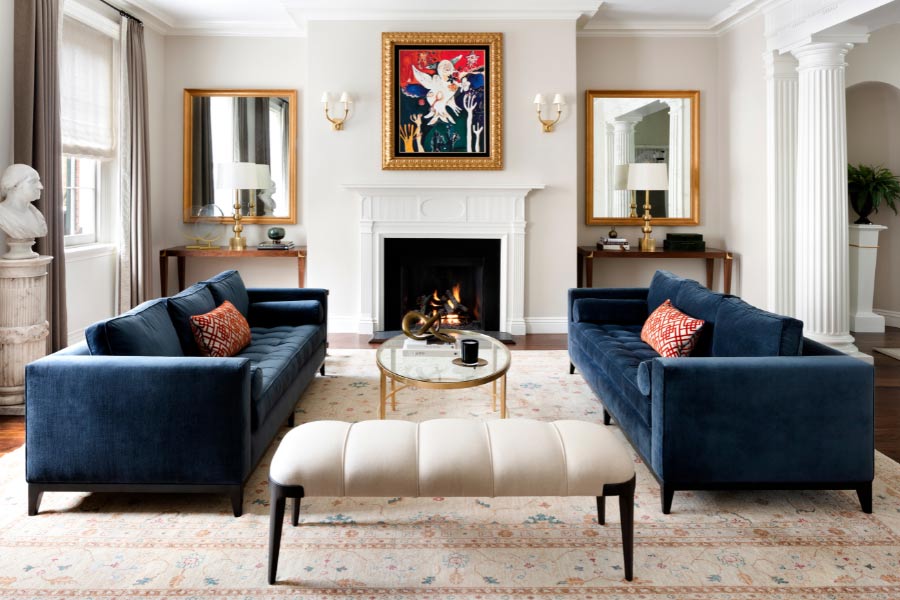
A recent Georgetown remodel we completed illustrates this balance beautifully. The home retained its classic architectural bones while being thoughtfully reimagined for modern family living. Traditional details were paired with fresh furnishings, tailored millwork, and a lighter, more livable sensibility that feels elegant yet effortless.
Successful Georgetown interiors often integrate modern systems discreetly—preserving historic charm while adding recessed lighting, upgraded HVAC systems, radiant heat, or enhanced storage solutions that work seamlessly within the original structure.
Reimagining Kitchens and Baths in Historic Homes
Kitchens and bathrooms are often where historic homes require the most transformation. These spaces must function for contemporary life while still feeling connected to the architecture of the home.
In Georgetown renovations, the most successful designs often feature custom cabinetry with classic lines, natural stone surfaces, unlacquered brass or polished nickel fixtures, and timeless materials such as marble, limestone, and handmade tile. In our project, updated living spaces feel polished and welcoming, demonstrating how carefully selected finishes can modernize a home without losing its soul.
Design Aesthetics for Georgetown Homes
Interior design in Georgetown often leans toward a classical-contemporary aesthetic that reflects the neighborhood’s sophisticated and understated elegance. Color palettes typically include warm neutrals, soft whites, charcoal, deep navy, muted greens, and layered earth tones, creating a timeless backdrop.
Materiality plays a major role. Walnut floors, marble countertops, tailored upholstery, silk or linen drapery, and hand-finished metals add depth and refinement. Texture is equally important—mixing velvet, woven fibers, antique woods, and natural stone creates warmth and visual richness. We often employ a layered approach, where curated furnishings, soft textiles, and refined finishes bring comfort and personality to a historic setting.
Furnishing Georgetown Interiors
Successfully furnishing a Georgetown home often means balancing antique and contemporary pieces to create rooms that feel collected rather than overly formal. Combining eras gives a home authenticity and helps prevent historic interiors from feeling static or museum-like.
Scale and proportion are especially important in Georgetown residences, where room dimensions and ceiling heights can vary dramatically. Custom furnishings are often the ideal solution, allowing each piece to suit the architecture while maximizing comfort and flow.
Interior Design for Timeless Living
Working with an interior designer who understands Georgetown’s architectural heritage ensures your home’s history is preserved while enhancing its livability. The most successful Georgetown interiors celebrate the past while embracing the present. That balance is what makes these homes so enduring—and why thoughtful projects continue to inspire timeless modern living.
Visit the Projects page on our website to learn more about our historic Georgetown renovation project.