
TMD Inspiration
Before We Begin a Custom Interior Design Project, We Ask One Question
Categories
Recent Press


GET IN TOUCH
On social
By phone
202 465-8114
By Mail
1350 Beverly Road, Suite 115
PMB 143
McLean, VA 22101
By form
Interested in working with us?
Use the contact form to tell us more about your project. Someone will get back to you within 48 business hours.
Based in McLean, VA
Creating inspired interiors for discerning clients since 2003. Accepting clients in DC, Virginia, Maryland, and select cities throughout the United States.
Before We Begin a Custom Interior Design Project, We Ask One Question
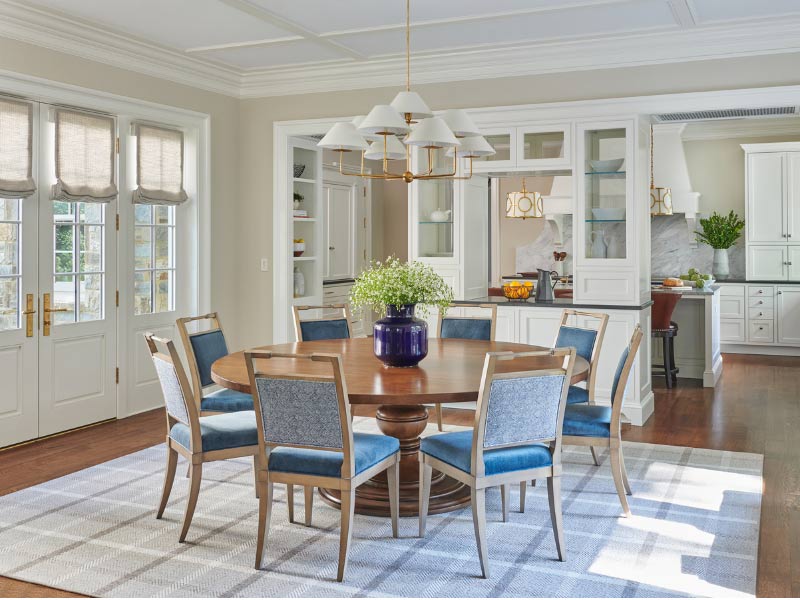 Every custom home interior design process we lead starts long before a single fabric swatch or floor plan is selected. It starts with a conversation: not about style, but about life. How do mornings actually unfold in this house? Where does the family end up gathering, no matter how many other rooms there are to choose from? What does a good evening at home look like?
The answers to those questions, not a mood board, are what shape every decision that follows. A home can be beautifully finished and still not quite fit the people living in it if it was designed around a look instead of a life. We’ve built our process around avoiding that outcome.
What We Ask Before We Begin
In some ways, it would be faster to start with square footage and finishes. But a floor plan drawn before we understand how a family actually moves through a day tends to solve for the wrong problem. It optimizes for photographs instead of mornings.
Researchers in environmental psychology have long studied how strongly a physical space shapes daily behavior and mood, often before a person consciously registers why a room feels right or wrong. That’s the same instinct behind our own guiding philosophy: light, scale, proportion, and flow are working on us long before we notice the furniture. Asking how you want to live helps us make sure those quiet forces are working in your favor, not against you.
What “How Do You Want to Live?” Actually Uncovers
This single question opens a much longer conversation, and the details that emerge from it are the real starting material for design. We’re listening for things like:
- Whether mornings are quiet and solitary or busy and shared
- How often the household gathers people beyond the immediate family, and how formally
- Which routines matter enough to protect — a standing coffee ritual, a Sunday dinner, a home office that needs real quiet
- How much privacy different family members need from one another, and when
- What stage of life this home needs to support now, and where the family is headed next
None of this shows up on a mood board, but all of it shows up in the finished home — in where a kitchen island ends up, how a primary suite is laid out, or whether a media room needs a door that actually closes.
From Conversation to Concept: How the Custom Home Interior Design Process Unfolds
Once we understand how a family wants to live, the custom home interior design process moves from listening to translating. Every material, layout, and furnishing decision gets tested against the answers from that first conversation, not against a trend.
This is also where being brought in early matters most. Because we’re regularly part of a project from the earliest planning stages, working alongside architects and builders rather than joining after blueprints are finished, lifestyle priorities can actually shape the architecture itself, not just the decorating layered on top of it. To learn more, see our article Why Building a Custom Home Requires a Unified Design Team.
Designing for Where You Are — and Where You’re Headed
A home that only answers today’s questions has a shorter shelf life than it should. Part of asking how you want to live is asking how that answer might change: a growing family, a parent who may eventually live with you, a primary suite that should stay comfortable decades from now. We’ve written specifically about the kinds of decisions that come up when designing a home for multigenerational living, and the same forward-looking approach shows up in smaller ways throughout every project, from flexible layouts to furnishings built to last.
This is also where we think about what we call the New Luxury: not excess, but ease, comfort, and craftsmanship that holds up over time. A well-considered piece of custom furniture, for example, is rarely just about appearance — it’s a decision about how a space will actually be used for years, which is part of why custom furniture plays such a central role in high-end home design.
The Difference This Makes You Notice at Home
Clients rarely describe the result of this process in terms of style at all. They describe it in terms of ease: a kitchen that supports how they actually cook and gather, a primary suite that feels like a retreat rather than just a bedroom, and a home office where focus comes easily. That’s not an accident — it’s the direct result of designing around a life instead of a look.
Researchers applying cognitive and perceptual models to residential design have found that the structure of a home’s layout and sensory environment has a measurable effect on how comfortable and functional people find their daily environment. Put simply, the feeling of a well-designed home isn’t just a matter of taste. It’s the result of choices made deliberately, in the right order.
Frequently Asked Questions
A custom home is an opportunity to create more than a beautiful space—it’s a chance to design a home that truly supports the way you live. From the earliest planning stages through the final details, our interior design process considers how your family moves, gathers, stores, works, and evolves, ensuring every decision feels intentional and personal. Below, we answer some of the most common questions about what it’s like to design a custom home with us.
- What is a custom home interior design process, and how is it different from decorating a finished room?
A custom home interior design process begins before construction is finalized, shaping layout, flow, and materials around how a family lives. Decorating a finished room works within walls that already exist. Ours starts earlier, so lifestyle can inform the architecture itself.
- When should I bring an interior designer into a custom home project?
Ideally, before blueprints are finalized. Bringing a designer in early allows lifestyle priorities, storage needs, and daily routines to shape the floor plan itself, rather than being solved for after the architecture is already set.
- How long does the custom home interior design process typically take?
Timelines vary by project, but a full custom build, from early planning through final furnishings, commonly takes 18 to 24 months. Renovations and additions typically move faster, depending on scope and any supply or permitting delays.
- Do I need to know my personal style before starting this process?
No. Style emerges from the lifestyle conversation, not the other way around. Many clients arrive with a general sense of what they like and let the design process clarify the specifics as we learn how they actually want to live.
- What if my family’s needs change after the home is finished?
A well-designed home is built to adapt. We plan for future stages of life from the start, so spaces can flex as routines, family size, or priorities shift over time, without requiring a full renovation.
Every home we design starts with the same question, because the answer is the only reliable foundation for everything that follows. Contact us today to begin your next project.